

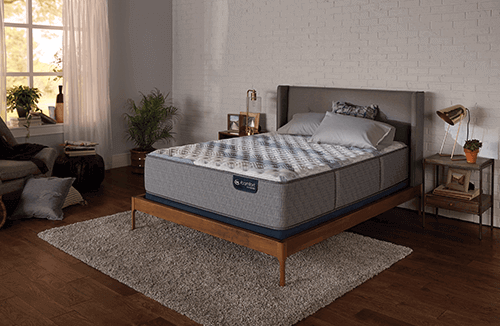
Morning starts with a lower back that feels locked up for the first hour and loosens on its own by the time the coffee is gone. There is a shallow valley on one side of the bed where a body has settled in the same spot for years, and a low ridge running down the middle that both sleepers now drift toward without meaning to. Nothing about the Serta mattress looks worn from the outside. The cover is clean, the quilting is intact, the corners are square, and that is exactly why replacing it feels premature even though the body has been filing complaints for months.
Find Out Whether Your Mattress Still Has Good Years Left
Our sleep specialists help Quad Cities shoppers tell the difference between a mattress that has genuinely worn out and one that is being ruined by the base underneath it. Compare firmness levels side by side in our showroom, with local delivery, setup and old mattress removal handled by our own crews.
The reassuring news is that these symptoms are measurable, so this does not have to be a guess. At Zeglin’s Home TV & Appliance, our team walks Quad Cities shoppers through that check every week, and a fair number of them find out the mattress is fine and the foundation underneath it is the actual problem. This guide covers the lifespan ranges owners really see, the everyday factors that add or subtract years, how different constructions age, the warning signs worth measuring, the care habits that buy more time, and what the warranty does and does not cover.
Key Takeaways
- Two different clocks are running: Structural lifespan is when the mattress physically fails, while comfort lifespan is when it stops holding your spine in line, and the comfort clock almost always runs out first.
- Seven to ten years is the working range: Most owners see roughly seven to ten years of good service with proper support underneath, with construction type and sleeper weight moving that number in either direction.
- The base decides more than people think: A sagging box spring, wide slat spacing or a missing center support leg will destroy a healthy mattress from below, and no amount of quality in the mattress prevents it.
- Sagging is measurable, not a feeling: A straightedge and a ruler turn a vague complaint into a number, which is also what a warranty claim requires.
How Long a Serta Mattress Lasts on Average
Most owners get about seven to ten years of good service from a Serta mattress used nightly on a proper, supportive foundation. Higher-density foams, heavier-gauge coils and lighter nightly loads push that toward the top of the range, while thin comfort layers, a failing base or heavy combined sleeper weight pull it toward the bottom.
That single number hides two different timelines, and blurring them is why so many people keep a bed years past its usefulness. Structural lifespan is the point where something physically fails: coils lose tension, foam breaks down into permanent compression, seams give way. Comfort lifespan is the point where the mattress stops delivering restorative support, even though every component is technically still there.
Comfort almost always goes first. A Serta mattress can look completely intact, with a clean cover, tight quilting and square edges, while the comfort layer beneath the surface has compressed under the shoulder and hip and no longer keeps the spine in a neutral line. Appearance is a poor indicator because the parts that wear out are the parts you cannot see.
The seven-to-ten-year convention comes from sleep industry guidance built on the pace at which foam and coil systems lose their support characteristics under nightly use. It is a reassessment marker rather than an expiration date. Some beds are done at six years and some are fine at twelve, which is why the sections below matter more than the average.
Try the fast self-check tonight, and again after your next night away from home. If you consistently wake up looser and less sore in a hotel bed or a guest room than you do in your own, the difference is your sleep surface. That comparison is more reliable than any visual inspection, because your body is measuring support directly.
Read More: 6 Benefits of Sealy Posturepedic Mattresses | Is a Tempur-Pedic Mattress Right for You?
What Actually Determines How Long Your Mattress Lasts
Two identical beds delivered on the same day can be five years apart in condition by the time they are eight. Here is where those years go.
Construction and Material Quality

Foam density and coil gauge are the two specifications that predict longevity better than anything else. Denser foam resists permanent compression, and lower-gauge, thicker steel resists fatigue. Both cost money to build in, which is why the same brand can offer beds that last very different amounts of time.
Foundation and Frame Support
This is the factor owners underestimate most. Specifics matter here:
- Slat spacing on a platform bed should be close together, generally no more than about three inches apart, because wider gaps let foam sag between the slats.
- Queen and king sizes need a center support rail with legs to the floor, and many frames are sold without them.
- A box spring with a broken or sagging internal frame transfers that dip straight into the mattress above it.
- The base must be level and unwarped, which is worth rechecking every year rather than assuming.
Body Weight and Sleep Position
Compression concentrates where the body is heaviest, which for most sleepers means the shoulder and the hip. Two people with a meaningful weight difference will wear their halves of a bed at different rates. Sleeping on the same side of the bed every night for a decade concentrates all of that in one zone, which is why single-side sleeping produces the classic one-sided valley.
Hours of Use and Household Conditions
A guest room mattress used forty nights a year is on an entirely different schedule than a primary bedroom mattress used every night. The math is simple, and it explains why a fifteen-year-old guest bed can still be fine while a seven-year-old primary bed is finished.
Moisture is the slow one. Body oils, perspiration and humidity break down foam and fiber over time, dust accumulates in the layers, and pets and children add wear that no specification sheet accounts for.
Is It the Mattress or the Base?
Before replacing anything, strip the bed and run this diagnostic. Pull the mattress off and look at the foundation alone on the floor or the frame. Sight along the top of it. If the base itself dips, bows or has a cracked slat, the base is the problem and the mattress may still be serviceable. If the base is flat and true and the mattress still shows a valley when it is lying on the floor, the mattress is the problem. Many owners replace the wrong component and are disappointed within a month.
How Different Serta Constructions Age Over Time
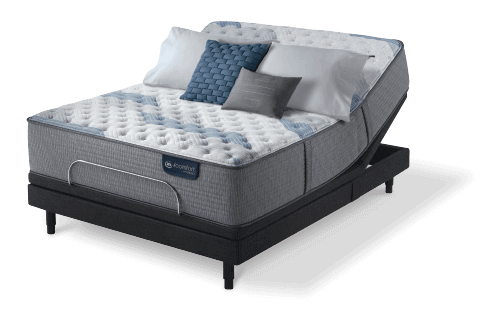
The Serta lineup spans several construction types, and each one fails in its own recognizable way.
- Traditional innerspring: Coils lose tension gradually and edges soften first, so the classic symptom is a bed that feels fine in the middle and collapses when you sit on the perimeter to put on shoes.
- Hybrid with pocketed coils and foam comfort layers: The coil unit typically outlives the foam above it, so the failure shows up as compression in the comfort layer while the support core is still sound.
- All-foam and memory foam: Wear appears as body impressions that stop recovering overnight, concentrated under the shoulder and the hip.
- Pillow-top and euro-top: Fiber and soft foam in the top panel flatten first, which creates a visible dip long before the support system underneath is worn out.
Collections across the brand illustrate the range. Perfect Sleeper builds are the innerspring and hybrid side of the line, while iComfort covers the foam and hybrid-foam territory with gel memory foam comfort layers. Tier generally correlates with material density and coil count, which is the real reason higher tiers tend to last longer.
Reading the Specs That Matter
Foam density is a measure of how much material is packed into a given volume. More material means more resistance to permanent compression. Coil gauge is a measure of wire thickness, where a lower number means thicker steel and slower fatigue. Those two numbers tell you more about how a bed will look in year eight than the price tag does, which is why a mid-tier bed with dense foam can outlast a premium bed built around a plush, low-density surface.
Normal Settling Versus Real Sagging
Every mattress develops some body impression in the first year as fibers and foams settle into the shape of the people using them. That is normal and usually shallow. True structural sagging is deeper, does not recover when the bed is empty overnight, and appears as a defined valley or a ridge rather than a soft contour.
Read More: Pros & Cons of Choosing a Hybrid Mattress | What is the Best Mattress for Side Sleepers?
Warning Signs Your Mattress Has Reached the End of Its Life
The physical signs come first, and they are the ones worth measuring.
- A visible dip or valley where you sleep that is still there when the bed is empty.
- A ridge running down the center that both partners roll toward.
- Sagging that no longer recovers after a night with no weight on the bed.
- Edges that collapse when you sit on them to dress.
- Coils that are audible when you shift position.
Here is how to turn that into a number, which is the single most useful habit our sleep team teaches: strip the bed completely, lay a straightedge or pull a piece of string taut across the width of the mattress at the deepest part of the dip, and measure with a ruler from the string down to the mattress surface at the lowest point. Do it with no weight on the bed and write the number down with the date. That measurement is what tells you whether you are looking at normal settling or a warranty-eligible defect, and it is exactly what a manufacturer will ask for.
The Physical Symptoms
- Morning stiffness or pain that eases within an hour of getting up.
- Tossing, turning and repeatedly hunting for a comfortable position.
- Waking unrefreshed after a full night in bed.
- Sleeping noticeably better in a hotel or a guest room.
- Allergy symptoms that are worse in the bedroom than elsewhere in the house.
What a Topper Can Fix and What It Cannot
This is the distinction most articles skip. A mattress topper can genuinely help a bed that is too firm, slightly too plush on the surface, or lacking pressure relief at the shoulder. It cannot fix structural sagging, because a topper follows the shape underneath it and simply puts softer material into the same valley. A new foundation can fix a dip caused by a failing base, and it is far cheaper than a mattress. Neither one restores a compressed support core.
Score it honestly. Count a yes for each of these: measurable sagging beyond a shallow contour, morning pain that fades after rising, sleeping better away from home, visible ridge or valley when the bed is empty, edge collapse, and an age past eight years. Three or more yes answers means replacement is warranted rather than optional.
How to Extend the Life of Your Mattress
Care buys years, and most of it takes minutes.
- Rotate head to foot every three to six months. Most modern constructions are one-sided and cannot be flipped, so rotation is the whole maintenance routine for wear distribution.
- Vacuum the surface every few months with an upholstery attachment to pull out dust and skin cells before they work into the fiber layers.
- Air the bed periodically by pulling the covers back for an hour in the morning so moisture can leave the surface.
- Wash bedding on a regular schedule so body oils are not sitting against the mattress cover indefinitely.
A quality mattress protector used from the first night is the highest-impact habit on that list by a wide margin. It blocks moisture, body oils and allergens, which are the three things that quietly break down foam and fiber from the top down. It also protects warranty eligibility, since a stained mattress is generally excluded from coverage.
Support Habits
- Check the frame and slats once a year for cracks, bowing or loosened hardware.
- Add or confirm a center support leg on any queen or king frame.
- Verify the foundation sits level and does not rock.
- Replace a box spring that has visibly dipped rather than putting a new mattress on it.
Habits That Shorten Life
- Sitting on the same edge every day to dress, which crushes the perimeter faster than sleeping ever will.
- Letting children jump on the bed, which stresses coil attachment points.
- Storing heavy items on the surface for long periods.
- Using a worn or incompatible base, especially a slatted frame with wide gaps.
Clean spills by blotting rather than soaking, use a mild solution sparingly, and let the area dry completely before making the bed. Soaking a foam layer traps moisture where it cannot leave, and that is how odor and breakdown start. If you plan to pair the bed with an adjustable base, confirm that the construction is rated to flex before you buy, since not every model is.
An Annual Care Calendar
- Monthly: Air the bed, check the protector, wash bedding on schedule.
- Every three to six months: Rotate head to foot and vacuum the surface.
- Every six months: Inspect the frame, slats and center support.
- Annually: Measure any developing dip with a straightedge and record the number with the date.
What the Warranty Covers and What It Does Not
Most mattress warranties are limited warranties running ten years, sometimes structured with a full coverage period followed by prorated years where you pay a share of the replacement based on how long you owned the bed. Read which structure applies before you assume you are covered.
Warranties cover manufacturing defects. They do not cover comfort preference changes, normal softening over time, or the discovery that you chose the wrong firmness. That distinction accounts for the large majority of denied claims.
The sagging threshold is the mechanism that decides most claims. Manufacturers specify a minimum indentation depth, measured with no weight on the mattress, before a dip qualifies as a defect. Anything shallower is classified as normal body impression. This is precisely why the straightedge measurement matters and why recording it with a date strengthens a claim.
What Voids Coverage
- An unsupportive or incompatible foundation, including slat spacing outside the specified range or a queen or king frame with no center support.
- Any stain on the mattress, which is why the protector pays for itself twice over.
- A removed law tag, which is the label used to identify the exact model.
- Transfer to a second owner, since coverage generally stays with the original purchaser.
Filing a Claim in Order
- Gather the original proof of purchase with the model name and delivery date.
- Photograph the mattress bare, including a wide shot and a close shot of the dip.
- Measure the deepest point with a straightedge and a ruler, photographing the ruler in place.
- Photograph the foundation and frame, including the center support, to show the base is compliant.
- Contact the retailer you bought from and submit the documentation.
- Schedule the inspection the manufacturer requests.
Buying from an authorized local retailer simplifies every step of that, because the store has your purchase record, knows the manufacturer’s process and handles the inspection scheduling. Third-party marketplace sellers frequently leave the buyer to argue that the bed was even authentic.
Save these at delivery: the receipt or invoice, a photo of the law tag, a photo of the mattress on the frame the day it arrived, and the model documentation. Four items, one folder, and a future claim becomes paperwork instead of an argument.
Serta Mattress Lifespan by Construction Type
| Construction | Typical Lifespan | First Sign of Wear | Best-Suited Sleeper | Rotate or Flip | Durability Rating |
|---|---|---|---|---|---|
| Innerspring | 6 to 8 years | Edge softening and coil noise | Back sleepers wanting a firm, bouncy feel | Rotate only on most modern builds | Moderate |
| Hybrid | 8 to 10 years | Comfort layer compresses over a sound coil core | Couples and combination sleepers | Rotate only | High |
| Memory foam and all-foam | 7 to 10 years | Body impressions that stop recovering overnight | Side sleepers needing pressure relief | Rotate only | Moderate to high |
| Pillow-top or euro-top | 6 to 8 years | Fiber flattening in the top panel | Side sleepers wanting a plush surface | Rotate only | Moderate |
| Latex | 10 to 15 years | Gradual softening rather than a defined dip | Sleepers wanting responsive support and long life | Rotate, some are flippable | Highest |
Read the table by matching the first-wear column to whatever your current bed is doing, because that tells you which construction you are actually living with. For maximum longevity, latex leads and a well-built hybrid follows close behind, since the coil unit carries the structural load while the foam handles comfort. Pillow-top surfaces trade some lifespan for immediate plushness, which is a reasonable choice as long as you know you are making it. All-foam beds sit in the middle and depend almost entirely on foam density, which is why two foam mattresses at the same price can age very differently.
Serta Mattress Pros and Cons for Long-Term Durability
Durability always involves a trade between comfort feel, price tier and years of service, and no construction wins on all three at once. The goal is matching the build to how your household actually sleeps rather than chasing the longest theoretical lifespan. Here is the honest ledger for a Serta mattress considered over its full life.
Pros
Broad construction range under one brand:
Innerspring, hybrid and foam options mean you can choose the wear pattern you would rather live with instead of accepting the only one offered.
Hybrid builds age gracefully:
The pocketed coil unit typically outlasts the foam above it, so the bed loses surface plushness before it loses structural support.
Predictable maintenance:
Nearly every current model is rotate-only, which makes the care routine a three-minute job four times a year rather than a two-person wrestling match.
Documented warranty structure:
A defined sagging threshold gives you a measurable standard to hold a claim against, which is more than an unspecified satisfaction promise offers.
Cons
Plush surfaces show wear first:
Pillow-top and euro-top comfort layers flatten before the support system is finished, which can make a structurally sound bed feel worn out early.
Coverage depends on your foundation:
Using a base with wide slat spacing or no center support can void the warranty on an otherwise healthy mattress, and that mistake is easy to make and hard to reverse.
What Quad Cities Homes Do to a Mattress Timeline

Two local realities shorten mattress life around here more than sleeper habits do. The first is humidity. Summers in the Mississippi River valley run humid for months, and older Davenport, Bettendorf, Rock Island and Moline houses were built long before whole-house dehumidification was standard, so a bedroom on the second floor of a century-old home spends a good part of the year holding moisture that foam and fiber absorb from the air and from the sleeper. That is the same moisture load that breaks down comfort layers from the top, and it explains why the identical bed can be visibly more settled here at year seven than it would be in a dry climate. The second is basement bedrooms, which are common in the area’s post-war ranches and split levels and which combine cool surfaces with poor air movement, a combination that puts a mattress on a base that is essentially sitting in a damp room.
- Run a dehumidifier in any basement bedroom and keep it running through the humid months, not only during a wet spell.
- Choose a slatted platform or an open foundation over a solid platform in a lower-level room so air can move under the mattress.
- Pull the covers back for an hour each morning during summer rather than making the bed immediately, which lets overnight moisture leave the surface.
- Use a breathable protector rather than a fully sealed vinyl one, so you block liquid without trapping humidity in the foam.
- Measure the doorway, the stairwell turn and any low ceiling angle before delivery day, because narrow stairs and tight landings in older homes here rule out some larger sizes entirely.
- Rotate on the earlier end of the three-to-six-month window if the bedroom is upstairs and unconditioned for part of the year.
Featured Mattresses Available at Zeglin’s Home TV & Appliance
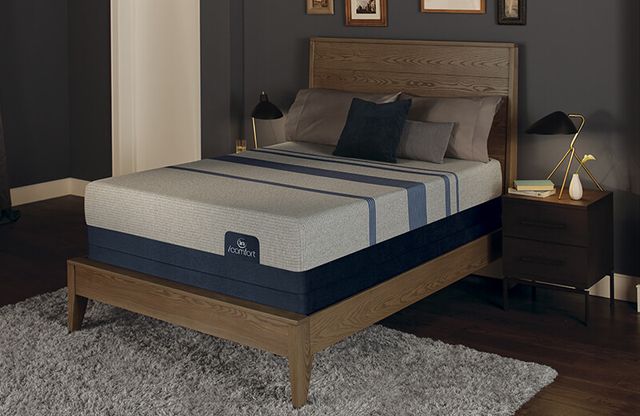
Both beds below come from the iComfort side of the Serta lineup, which is the brand’s gel memory foam and hybrid territory. They are here as two different answers to the durability question covered above, one built around a coil support core and one built around foam. Come lie on them for a full ten minutes each in our showroom, since the difference between a first impression and a settled impression is exactly what decides whether you still like a mattress in year five.
Serta® iComfort® Hybrid Blue Fusion 1000 Luxury Firm Cal King Mattress
This is the durability pick of the two, and the reason is structural. A hybrid pairs a coil support core with foam comfort layers, which means the part carrying the load is steel rather than foam, and that is the construction most likely to reach the far end of the lifespan range. The luxury firm feel gives back sleepers and combination sleepers spinal support without the surface plushness that flattens first. In California King, it suits taller sleepers and couples with a meaningful weight difference, since a coil core resists the uneven compression that single-side wear creates. Come test the firmness in our showroom before you commit.
Top Features
- Hybrid coil and foam construction: A steel support core carries the structural load, which is the build most resistant to permanent compression over time.
- Luxury firm comfort level: Support-forward rather than plush, which suits back and combination sleepers and slows surface settling.
- California King size: Extra length for taller sleepers, with the width to keep a couple from crowding a single wear zone.
- iComfort gel memory foam layers: Pressure relief at the shoulder and hip without giving up the responsiveness of the coil unit underneath.
Serta® iComfort® Blue Max 1000 Plush TWIN XL Mattress
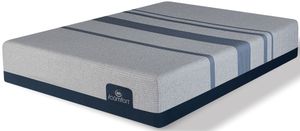
The plush comfort level here is built for the side sleeper who needs the shoulder and hip to sink in rather than be held up, which is the pressure-relief profile foam does better than anything else. Twin XL makes it a natural fit for a guest room, a dorm-style setup, a single sleeper’s bedroom, or one half of a split king on an adjustable base. Lower nightly hours in a guest room also mean this bed will comfortably outrun the usual lifespan math. Rotate it head to foot on schedule and keep a protector on it from the first night. Stop in and feel the plush surface for yourself.
Top Features
- Plush comfort level: Deeper contouring at the shoulder and hip, which is the pressure relief side sleepers consistently ask for.
- iComfort foam construction: Gel memory foam layering built for body-conforming support and motion absorption.
- Twin XL size: Extra length over a standard twin, and the right size for guest rooms, single sleepers or half of a split king.
- Adjustable base friendly size: Twin XL is the standard building block for split king setups on an adjustable foundation.
How Long Your Serta Mattress Lasts Comes Down to Care and Support
Expect roughly seven to ten years from a Serta mattress, with hybrids and latex reaching the top of that range and plush pillow-top surfaces reaching it first at the bottom. Measure any dip with a straightedge before you decide, check whether the foundation is the real culprit, and give the bed a protector and a rotation schedule from day one. Those three habits are worth more years than any specification on the label.
When it is genuinely time, come compare feels side by side. Visit Zeglin’s Home TV & Appliance in Davenport or Moline to lie on firm, luxury firm and plush surfaces in one room instead of guessing from a website, or call our team with questions about foundations and adjustable base compatibility. We deliver and set up locally, remove the old mattress, and handle warranty support here rather than routing you to a claims portal. Waking up without that first hour of stiffness is the whole point, and it is worth getting right.
Frequently Asked Questions about Serta Mattress Lifespan
A Serta mattress generally lasts seven to ten years with nightly use on a proper supportive foundation, with hybrid and latex builds reaching the upper end and plush pillow-top surfaces often reaching the lower end. Comfort typically fails before structure does, so the honest replacement signal is how your body feels in the morning rather than how the mattress looks.
A shallow body contour that recovers overnight is normal settling in any mattress, while a defined dip that remains with no weight on the bed indicates real structural sagging. Measure it with a straightedge across the mattress and a ruler at the deepest point, since manufacturers set a specific indentation depth as the threshold for a defect.
A Serta warranty covers sagging that exceeds the specified indentation depth measured with no weight on the mattress, because that qualifies as a manufacturing defect. It does not cover normal body impressions, comfort preference changes or gradual softening, and coverage can be voided by an unsupportive foundation or by staining.
Rotate a Serta mattress head to foot every three to six months to distribute wear across the surface. Nearly all current models are one-sided constructions with the comfort layers built on top of the support core, so they should be rotated rather than flipped, and flipping a one-sided bed puts you sleeping on the base.
Yes, an unsupportive base is one of the fastest ways to ruin a healthy mattress, because slat spacing wider than about three inches lets foam sag between the slats and a queen or king frame without a center support leg dips in the middle. A sagging box spring transfers its own dip directly into the mattress above it and can also void warranty coverage.
A topper cannot fix structural sagging, because it conforms to the valley underneath it and simply places softer material into the same dip. A topper is a reasonable fix for a mattress that is merely too firm or lacks surface pressure relief, and a new foundation is the right fix when the base rather than the mattress is what has failed.