


The laundry closet off the hallway measures thirty-two inches across, the wall behind it backs onto an interior stairwell with nowhere to run a duct, and the only receptacle in reach is a standard three-prong plug on a 120-volt circuit. A load of bath towels has been sitting damp in the drum since seven that morning because nobody was home at lunch to move them into a dryer. Those three problems together are the exact reason the washer dryer combo exists, and they explain why single-drum machines keep turning up in condo hallways, second-floor laundry rooms and homes where no vent path was ever framed in.
Find the All-in-One Laundry Machine That Actually Fits Your Space
Our appliance team helps Quad Cities households match laundry equipment to real closet measurements, real wiring and real load volume, not to a spec sheet. Shop all-in-one combos, front load pairs and compact laundry with delivery, professional installation and factory-authorized service handled locally.
Explore washer dryer comboHere is the encouraging part of that story: the technology inside these machines has improved enough in the last few years that a combo is now a real answer rather than a compromise you tolerate. At Zeglin’s Home TV & Appliance, our team sizes up laundry spaces across the Quad Cities, from Davenport apartments to Moline houses with a hookup wedged under a staircase, so we know which of these units fits a room and which one only fits on paper. This guide walks through how a washer dryer combo works, the three drying technologies available, the specifications that change your laundry day, how the major brands approach the category, the ownership realities nobody mentions in a product listing, and the seven models we rank by brand at the end.
Key Takeaways
- One drum, one load, zero transfers: A washer dryer combo washes and then dries the same load in a single drum, so wet laundry never has to be moved to a second machine or remembered later in the day.
- Drying technology sets the running cost: Heat pump models recycle warm air instead of exhausting it, which is why they use the least energy and treat fabric the most gently, while condenser and vented designs each trade efficiency for something else.
- Cycle time is the honest trade-off: A full wash and dry in a ventless combo commonly runs two to four hours, which is the single most frequent owner complaint and the thing to weigh before buying.
- Installation flexibility is the real selling point: Many combos run on a standard 120-volt outlet with no exterior duct at all, which opens up closets, condos and upper floors where a traditional pair was never an option.
How a Washer Dryer Combo Works and What Makes It Different
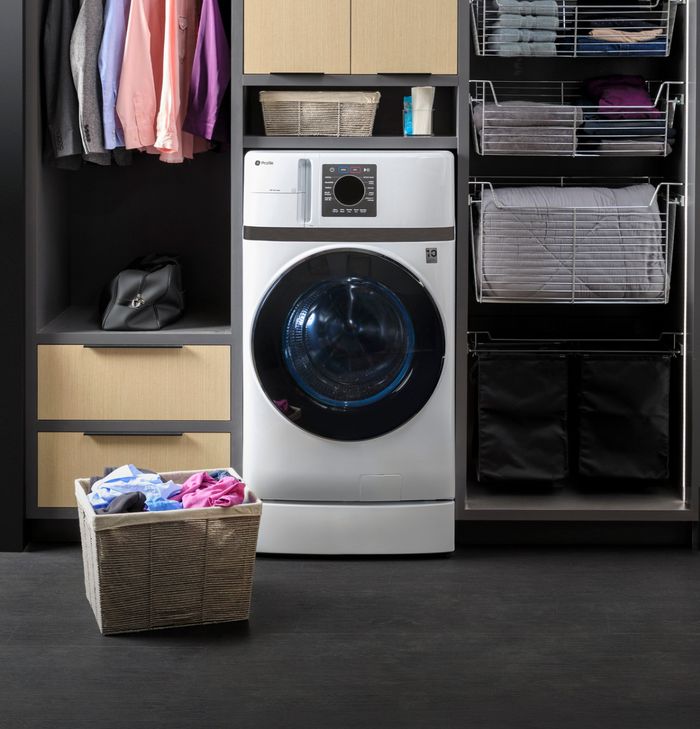
A washer dryer combo is a single appliance with one drum that washes a load and then dries that same load without any transfer between machines. You put dirty clothes in, you take dry clothes out, and nothing happens in between except waiting.
That single-drum design is what separates it from the two categories people constantly mix it up with. A stacked pair is still two separate machines bolted vertically, each with its own drum and its own controls. A laundry center is two machines in one welded cabinet, usually with a small washer below and a small dryer above. A combo has one drum doing both jobs, which is why it fits where neither of the others can.
The Three Ways a Combo Removes Moisture
How the machine gets water out of your clothes is the decision that drives everything else about ownership.
- Heat pump ventless: A closed refrigerant loop heats air, pulls moisture out of it over a cold coil, then reheats and reuses that same air. Nothing is exhausted, drying temperatures stay lower, and the condensed water drains out with the wash water.
- Condenser ventless: Air is heated and passed through the load, then cooled against a condenser so the moisture drops out as water. No duct is needed, but the process rejects waste heat into the room around it.
- Vented all-in-one: The drying side works like a conventional dryer, blowing heated air through the load and pushing humid air out through a four-inch duct to the outside. Faster drying, but it needs the duct.
What Ventless Actually Means for Your Installation
Ventless does not mean the water disappears. It means the moisture is condensed back into liquid and sent down the same drain the wash water uses, so the machine needs a working drain but no hole in an exterior wall. That is the whole reason these units can sit in an interior closet, a bathroom, a hallway alcove or a bedroom-level laundry space.
Electrical requirements follow the same logic. Many ventless models operate on an ordinary 120-volt household outlet on a dedicated circuit, which is a large part of the appeal in older buildings that never got a 240-volt laundry receptacle. Larger-capacity units and vented designs vary, so the outlet type is always worth confirming against the specific model before delivery day.
Why a Heat Pump Changes the Math
A conventional dryer heats air once and throws it away. A heat pump moves heat rather than generating all of it fresh, capturing warmth from the exhaust air and putting it back into the drum, cycle after cycle. Less energy goes into heating, and because the drying air runs cooler, elastic, prints and synthetic fibers take less abuse over hundreds of loads. The trade you accept is time, since lower temperatures dry more slowly than a blast of hot air ever will.
Who a Washer Dryer Combo Is Right For and Where It Fits

These machines solve a space problem first and a convenience problem second. That framing tells you almost immediately whether you are the buyer.
A combo is usually the right call for apartments and condos, small houses, narrow laundry closets, in-law suites, RVs and boats, second-floor laundry rooms near bedrooms, and any home where running a duct through an exterior wall is expensive or simply not permitted.
A separate pair is usually the better answer for large households running several loads a day, anyone who dries heavy bedding weekly, and families who need to wash a second load while the first one dries. A combo cannot do two things at once, and no feature list changes that.
Space Planning Details People Miss
- Door swing direction and whether the door is reversible, which decides how you load in a narrow closet.
- Clearance behind the cabinet for the fill hoses and drain hose, which adds real depth beyond the published cabinet dimension.
- Front-load door clearance in front of the machine, since a swung-open door in a 32-inch closet can hit the opposite jamb.
- Whether the unit is designed to fit under a standard counter, which matters in kitchen and bathroom installations.
- Floor levelness and floor strength, especially on a second story where a fast spin cycle can move an unlevel machine.
The Pre-Delivery Checklist
Confirm these six things before the truck is scheduled, not after:
- Outlet type, amperage and exact location relative to the machine.
- Hot and cold water supply valves that shut off cleanly.
- Standpipe or drain height within the range the manufacturer specifies.
- Doorway and stairway width along the entire path from the front door to the laundry space.
- Floor condition, levelness and whether a drain pan is required by the building.
- Whether a pedestal is available and whether it still fits under the closet header.
Here is the measurement habit our delivery crews rely on and that saves the most failed installs: measure the closet opening at the narrowest point, then measure the machine depth with the hoses attached and curved, not the cabinet depth printed on the spec sheet, because four to six inches of hose behind the unit is what actually decides whether the door will close.
Noise and Vibration in Living Space
A combo often ends up closer to bedrooms and living rooms than a basement laundry ever was. Spin speeds on these units run high, which is good for drying time and bad for a shared wall at eleven at night. Look for vibration reduction systems, insist on a level install, and consider anti-vibration pads on a wood-framed upper floor.
Key Features to Compare Before You Buy

Once you know a combo fits, the specifications separate the machines that suit your household from the ones that will frustrate you.
Capacity in Realistic Terms
- Compact, roughly 2.2 to 2.6 cubic feet: A few days of clothing for one or two people, or a single set of sheets. Right for a studio, an RV or a guest suite.
- Mid-size, roughly 4.5 to 4.8 cubic feet: A full hamper plus towels for a couple or a small family, and the sweet spot of the category.
- Large, roughly 5.0 cubic feet and up: A king comforter or a genuine family load, and the closest a combo comes to full-size pair capacity.
Cycle Time, Stated Honestly
Ventless drying is slower than vented drying. A complete wash-and-dry cycle in a heat pump or condenser combo commonly lands somewhere between two and four hours depending on load size and fabric. Some newer machines advertise a two-hour complete cycle on a smaller load. Plan laundry around that number rather than being surprised by it, and understand that the single biggest lever you control is drying less than a full wash load.
Features That Earn Their Price
- Energy Star certification, which signals verified efficiency rather than marketing language.
- Sanitize and steam cycles for bedding, allergy concerns and set-in odors.
- Automatic detergent dispensing, which doses by load size and prevents the overdosing that causes most residue complaints.
- Smart app control with cycle-complete notifications, which genuinely matters when a cycle runs three hours and you are not in the room.
- Quick wash and quick dry options for the small urgent load.
- A self-clean or drum-refresh cycle, plus accessible lint and condenser filters.
Build Details and Support
Stainless drums resist rust and snagging better than coated alternatives. Door reversibility decides closet fit. Lint filtration and condenser filter access decide how easy the machine is to live with. And because a combo is a complex appliance with one drum doing two jobs, warranty terms and local service availability carry more weight here than in almost any other category. A three-hour drive to the nearest authorized technician turns a small repair into a large inconvenience.
A Quick Way to Rank Your Own Priorities
Score capacity, cycle time and efficiency in the order your household needs them. One or two people in an apartment should rank efficiency first and capacity last. A family of four squeezing laundry into evenings should rank cycle time first. Anyone drying bedding regularly should rank capacity first and accept the longer cycle that comes with a bigger drum.
How the Leading Laundry Brands Approach the All-in-One Combo

Brands are not interchangeable in this category, because each manufacturer made a different bet about which trade-off shoppers would accept.
- GE Profile: The most visible push into heat pump ventless technology in the North American market, with an emphasis on fast complete cycles, automatic detergent dispensing and a mature app.
- LG: Capacity leadership and inverter motor engineering, with a strong record in front load laundry and a deep smart platform.
- Samsung: Design-led, with configurable finish options, large drums and heavy investment in app-driven cycle recommendations.
- Whirlpool: Straightforward mainstream engineering, broad parts availability and controls that anyone in the household can run without a manual.
- Bosch and Miele: Compact European engineering, quiet operation and tight tolerances, generally in smaller capacities than American shoppers expect.
- Electrolux: Fabric care and gentle drying, aimed at the shopper who cares how clothing looks after several hundred cycles.
Cycle-time philosophy is where these approaches split most visibly. Some brands optimize for the shortest possible complete cycle, others for the lowest energy draw, and a few for the gentlest treatment of fabric. Parts availability and service network reach differ just as much, and that is the factor most buying guides skip entirely. Ranking the models below by brand keeps that context attached, so you are comparing two machines built on the same engineering philosophy rather than two spec sheets stripped of it.
Read More: Cafe Kitchen Appliances: Styles, Features & Benefits | Are Bosch Dishwashers Worth It? Pros, Cons, & Top Models
Maintenance, Care, and What Ownership Really Looks Like
A combo asks for a little more attention than a separate pair, mostly because one drum is doing two jobs in a sealed cabinet.
The Routine
- Clean the lint filter after every drying cycle, the same way you would with a standalone dryer.
- Rinse the condenser or heat pump filter on the schedule in the manual, typically monthly.
- Wipe the door gasket and glass weekly, paying attention to the fold at the bottom where water collects.
- Leave the door ajar between loads so the drum dries out.
- Run the drum-clean or refresh cycle monthly with the product the manufacturer recommends.
Odor, Detergent and Load Size
A sealed front-load drum with a rubber gasket will develop odor if it never gets airflow. That is not a defect, it is physics, and the fix is leaving the door open and running the cleaning cycle on schedule.
Detergent choice matters more than most owners expect. High-efficiency detergent is required, and less of it than the cap suggests. Overdosing creates suds that cushion the load, leave residue on fabric, extend cycle times while the machine rinses longer, and eventually trigger error codes.
Load-size discipline is the other habit worth building. Most combos will wash a bigger load than they can dry well. If clothes come out damp at the end of a complete cycle, the answer is almost always a smaller dry load, not a longer setting.
Seasonal Checks
- Monthly: Filters rinsed, gasket wiped, drum-clean cycle run.
- Quarterly: Drain hose checked for kinks, standpipe checked for slow drainage, inlet screens inspected for sediment.
- Annually: Leveling rechecked, hoses inspected for bulges or cracking, and the machine pulled forward to clear lint from behind it.
Before an extended absence, shut both supply valves and run a drain cycle so no standing water sits in the pump. Combos routinely last ten years or more with that level of care, and professional installation at the start prevents the leveling and drainage problems that shorten that number.
Washer Dryer Combo Types Compared: Heat Pump, Condenser, and Vented
| Type | How Moisture Leaves | Wash and Dry Time | Installation Needs | Efficiency and Capacity | Best-Fit Household |
|---|---|---|---|---|---|
| Heat pump ventless combo | Condensed in a closed loop and drained | Longest, often 2 to 4 hours | No duct, standard 120-volt outlet on many models | Highest efficiency, compact to large drums | Condo, apartment or upper-floor laundry with no vent path |
| Condenser ventless combo | Condensed against a cooled surface and drained | Long, often 2 to 3.5 hours | No duct, but rejects heat into the room | Moderate efficiency, usually smaller drums | Small home or bathroom install with decent air circulation |
| Vented all-in-one combo | Blown outside through a four-inch duct | Shorter, often 1.5 to 2.5 hours | Requires exterior duct, often a 240-volt circuit | Moderate efficiency, mid-size drums | Home that already has a vent and wants one machine |
| Separate washer and dryer pair | Dryer exhausts through a duct | Wash and dry can overlap, so throughput is highest | Duct plus a 240-volt circuit and floor space for two units | Broadest capacity range, highest throughput | Large family running multiple loads daily |
Read that table by the row that matches your building, not the row that sounds most advanced. An apartment dweller with no duct and no 240-volt outlet has exactly one realistic option, and it is a ventless combo. A couple in a small house with an existing vent can choose either a vented combo or a heat pump model, and the decision comes down to whether speed or running cost matters more. A family weighing a combo against a full pair should be honest about load volume, because throughput is the one thing a single drum can never match.
Washer Dryer Combo Pros and Cons Every Buyer Should Weigh
A combo trades speed and capacity for space savings and installation freedom. Whether that is a good deal depends almost entirely on how many loads your household runs in a week and where the machine has to live. The strengths below are genuine, and so are the limits.
Pros
Fits where a pair cannot
One cabinet replaces two, which opens up closets, condos, bathrooms and upper-floor spaces that were never framed for laundry.
No exterior duct required on ventless models
That removes the single most expensive obstacle in older buildings and in units where an outside wall is not available.
Runs on standard household power in many cases
A 120-volt outlet on a dedicated circuit is often enough, which avoids an electrical upgrade.
Nothing to transfer and nothing to forget
Wet laundry cannot sit in the drum all afternoon, because the machine moves straight into drying on its own.
Lower running cost with a heat pump
Recycling warm air instead of exhausting it cuts energy use per load and treats fabric more gently at the same time.
Cons
Complete cycles run long
Two to four hours for wash and dry is normal in a ventless machine, which reshapes how you schedule laundry day.
One drum means no overlapping loads
You cannot wash a second load while the first dries, so household throughput is capped.
More maintenance discipline required
Filters, the gasket and the drum-clean cycle all need attention, and skipping them shows up as odor and poor drying.
What Quad Cities Housing Does to an All-in-One Laundry Plan
Two features of this area decide more combo installations than any spec sheet does. The first is housing age. Davenport, Bettendorf, Rock Island and Moline are full of pre-1940 homes with stone or brick foundations, balloon framing and electrical panels that were expanded piecemeal rather than planned, which is why so many of these houses have a laundry hookup in a corner of the basement and nowhere sensible upstairs. Running a new duct through a masonry foundation wall is real money, and running a new 240-volt circuit up two floors in a balloon-framed wall is more. A ventless combo on a 120-volt circuit sidesteps both problems, which is exactly why it keeps winning in these houses. The second feature is water. Groundwater across eastern Iowa and western Illinois is hard, and hard water is the quiet enemy of a low-water machine, because mineral scale builds on the heating element and inside the drum where you cannot see it, and because hard water requires more detergent to work, which pushes owners straight into the overdosing problem that causes residue and error codes.
- Confirm the drain standpipe height in an older basement before delivery, since many were built for a top-load washer with a different discharge height.
- Add a water softener or use a detergent formulated for hard water rather than simply pouring in more.
- Run the drum-clean cycle monthly rather than quarterly if your home is on untreated well water outside the city systems.
- Check the floor joists and add a plywood platform if the laundry is moving to an upper floor in an older house, since a high spin speed on springy century-old framing is loud.
- Plan around the humid river-valley summer if the machine goes in a closed basement, because a condenser model adds warmth and moisture to a room that already has both.
- Ask about a drain pan for any second-floor install, which many condo associations and insurers in the area expect regardless of the machine type.
Read More: Best Appliance Stores in Davenport, Iowa: Why Locals Choose Zeglin’s | How to Choose Among Appliance Stores in Davenport, Iowa
The Best Washer Dryer Combos Ranked by Brand at Zeglin’s Home TV & Appliance
The lineup below is grouped by brand and ranked from the most capable all-in-one machines on our floor down to the compact specialists. Each one is a genuine single-drum unit rather than a stacked pair, so every model here washes and dries the same load without a transfer. Read each entry against the buyer profiles above, then come see the drum sizes in person, because cubic feet on paper and cubic feet with your arm in the door are two different impressions.
GE Profile™ ENERGY STAR 4.8 Cu. Ft. Carbon Graphite Washer Dryer Combo
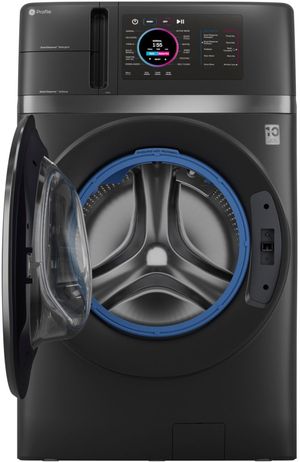
This is the machine to look at first if you want the category’s best current answer to the cycle-time complaint. The 4.8 cubic foot drum handles a full hamper plus towels for a couple or a small family, and the Energy Star certification confirms the efficiency claim rather than implying it. The carbon graphite finish suits a laundry space that is visible from living areas rather than hidden behind a louvered door. For a condo owner or an upper-floor laundry room with no vent path, this is the mainstream recommendation in our showroom. Come run the door swing against your closet dimensions before you decide.
Top Features
- 4.8 cubic foot capacity: Large enough for a full hamper and a set of towels in one pass, which is the practical family size in this category.
- Energy Star certified: Verified efficiency rather than a marketing claim, which shows up on the utility bill across a decade of laundry.
- Ventless installation: No exterior duct is required, so the machine can go in a closet, a bathroom or a bedroom-level laundry room.
- Carbon graphite finish: A finished look for laundry areas that guests actually walk past.
GE Profile™ ENERGY STAR® 4.8 Cu. Ft. Sapphire Blue UltraFast Washer Dryer Combo with Ventless Inverter Heat Pump Technology

Everything the heat pump section explained about recycled warm air and gentler drying is what this unit is built on, and the name says so directly. Ventless inverter heat pump technology means lower drying temperatures, lower energy draw and no duct at all, while the 4.8 cubic foot drum keeps capacity in family territory. An inverter motor also tends to run quieter and hold speed more steadily, which matters when the machine shares a wall with a bedroom. The sapphire blue finish is the reason to choose this one over its graphite sibling if your laundry space is part of the room rather than tucked away. Ask our team about finish availability.
Top Features
- Ventless inverter heat pump drying: Warm air is recycled instead of exhausted, which is the most efficient drying method available in an all-in-one.
- UltraFast complete cycle: Built around shortening the wash-and-dry time that owners most often complain about.
- 4.8 cubic foot drum: Room for bedding and full family loads without stepping outside the ventless category.
- Energy Star certified: Independent confirmation of the efficiency the heat pump design is built to deliver.
GE Profile™ 4.6 Cu. Ft. White Washer Dryer Combo

For the household that wants GE Profile engineering without stepping to the top of the range, this 4.6 cubic foot model is the sensible middle. The capacity difference against its larger siblings is small enough that most weekly loads never notice it, and white remains the finish that disappears into a utility room or a basement corner. This suits a couple upgrading from a laundromat routine or a small family replacing an aging stacked pair in a space that cannot fit two machines anymore. It is also the entry point into the brand’s ventless approach for anyone whose main obstacle is the missing duct. See it beside the 4.8 models on our floor to judge the drum difference yourself.
Top Features
- 4.6 cubic foot capacity: Family-scale drum volume in a footprint sized for closets and small laundry rooms.
- Ventless operation: Installs where no exterior duct exists, which is the main reason shoppers land in this category.
- Classic white finish: The neutral choice for a utility space, and easiest to match with surrounding cabinetry.
- Single-drum convenience: Wash and dry run back to back with no transfer, so laundry cannot be forgotten mid-process.
LG 5.0 Cu. Ft. Graphite Steel Washer Dryer Combo

Capacity is the headline here, and it settles a real argument. At 5.0 cubic feet this is the largest drum in our combo lineup, which means bulky bedding and comforters get room to tumble instead of balling up against the door, the classic limitation of smaller all-in-one machines. That makes it the pick for a household that wanted a full pair and could only fit one cabinet. LG’s front load and inverter motor experience runs deep, and the graphite steel finish reads as an appliance rather than a utility box. If bedding is what pushed you toward a bigger machine, bring the comforter size to our showroom and we will talk through the drying load.
Top Features
- 5.0 cubic foot capacity: The largest drum in this group, and the one most comfortable with comforters and bulky bedding.
- Ventless drying: Full-size capacity without needing an exterior duct, which is an unusual pairing in this category.
- Graphite steel finish: A finished, modern look for laundry spaces that are open to living areas.
- Established front load engineering: Built on a platform with a long track record in drum design and motor control.
Samsung Bespoke 5.3 Cu. Ft. Dark Steel AI Laundry Combo

The 5.3 cubic foot drum makes this the biggest all-in-one on our floor, and the Bespoke design program means the dark steel finish is a deliberate choice rather than whatever the factory shipped. Samsung’s AI approach is aimed squarely at the load-size discipline problem covered earlier, reading what is in the drum and setting the cycle rather than leaving that judgment to you at eleven at night. For a family that needs maximum capacity in one cabinet and wants the machine to make the small decisions, this is the pick. It is also the natural choice if the rest of your kitchen or laundry room already carries a Samsung finish. Stop in and compare its drum against the LG side by side.
Top Features
- 5.3 cubic foot capacity: The largest drum in this lineup, built for households that would otherwise need a full-size pair.
- AI cycle selection: The machine reads the load and adjusts settings, which reduces the guesswork behind most poor drying results.
- Bespoke dark steel finish: A design-forward look for laundry spaces that are part of the living area.
- Ventless single-drum design: Full family capacity with no duct and no transfer between wash and dry.
Whirlpool® 4.5 Cu. Ft. White Washer Dryer Combo
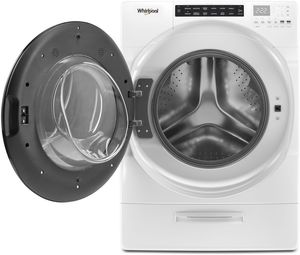
This is the practical, no-drama entry into the category, and for a lot of households it is the right answer. The 4.5 cubic foot drum covers a couple or a small family comfortably, the white finish fits any utility space, and Whirlpool’s controls are the kind anyone in the house can operate correctly without reading a manual first. Parts availability and service coverage for the brand are as broad as anything in laundry, which matters more in a complex single-drum appliance than in almost any other product we sell. For a rental property, an in-law suite or a first combo purchase, start here. Ask our team what installation looks like in your specific closet.
Top Features
- 4.5 cubic foot capacity: Sized for a couple or a small family, and the most common load profile in this category.
- Straightforward controls: Clear cycles rather than a touchscreen, which is what many shoppers actually prefer.
- Wide parts and service support: A broad service network, backed by our own factory-authorized department locally.
- Compact single-cabinet footprint: One machine where two would never fit, with no transfer step in the middle.
GE® 2.4 Cu. Ft. White Washer Dryer Combo
Small spaces need small machines, and this 2.4 cubic foot unit is the compact specialist of the group. It is built for a studio apartment, a tiny house, an RV, a boat, a guest suite or a second-floor closet where even a 4.5 cubic foot cabinet will not clear the door frame. Loads have to be sorted smaller, which is simply the honest cost of the footprint, and the payoff is a machine that fits an opening nothing else on this list will. For a one or two person household that runs laundry every few days rather than in weekend marathons, the capacity is genuinely enough. Bring your closet measurements and we will confirm the fit before you buy.
Top Features
- 2.4 cubic foot compact capacity: The smallest footprint here, made for closets, studios and recreational vehicles.
- Ventless design: No exterior duct required, which is what makes an interior closet installation possible at all.
- Standard white finish: Neutral and easy to tuck into a bathroom, hallway or utility alcove.
- Full wash and dry in one drum: Complete laundry capability in a cabinet sized for spaces that were never meant to hold any.
Frequently Asked Questions about Washer Dryer Combos
A washer dryer combo is worth it when space, venting or electrical service rules out a separate washer and dryer, because one cabinet does both jobs with no duct and often no 240-volt circuit. A separate pair still wins on total throughput and drying speed, so households running several loads a day generally get more value from two machines.
A complete wash-and-dry cycle in a ventless washer dryer combo commonly runs two to four hours depending on load size, fabric type and the drying technology inside. Reducing the size of the load you dry is the fastest way to shorten that time, since most combos will wash more laundry than they can dry efficiently in one pass.
No, a ventless washer dryer combo requires no exterior dryer vent, because it condenses moisture back into water and sends it out through the same drain line the wash water uses. It still needs hot and cold water supply lines, a working drain at the correct standpipe height and a suitable electrical outlet.
Many ventless washer dryer combo models are designed to run on a standard 120-volt household outlet on a dedicated circuit, which is a large part of why they work in older buildings and condos. Vented and some large-capacity units differ, so confirm the electrical requirement for the exact model before delivery is scheduled.
Capacity ranges from about 2.4 cubic feet in compact units up to roughly 5.3 cubic feet in the largest all-in-one machines, which spans a few days of clothing for one person to a full family hamper with towels. The practical limit is the dry side rather than the wash side, so plan on drying slightly less than the maximum wash load for the best results.
A well-maintained washer dryer combo generally lasts around ten years, which is comparable to a front load washer used on the same schedule. Cleaning the filters, running the drum-clean cycle monthly and using the correct dose of high-efficiency detergent are the three habits that most reliably get a machine to the far end of that range.
Choosing the Right Washer Dryer Combo for Your Home
A washer dryer combo wins on space and installation freedom, the drying technology inside it decides both cycle time and running cost, and your weekly laundry volume is what settles whether one drum is enough or whether you need a full pair. Match the machine to the closet, the wiring and the number of loads you actually run, and the shortlist gets short fast.
Come see them run. Shop laundry online at Zeglin’s Home TV & Appliance, or visit us in Davenport or Moline to compare drum sizes, door swings and control panels against each other in one room. Our appliance specialists will help you confirm your space and hookups before you commit, our crews handle delivery, professional installation and haul-away of the old set, and our factory-authorized service team is right here in the Quad Cities years after the sale. That combination is what an independent retailer gives you instead of a boxed delivery and a call center queue.