

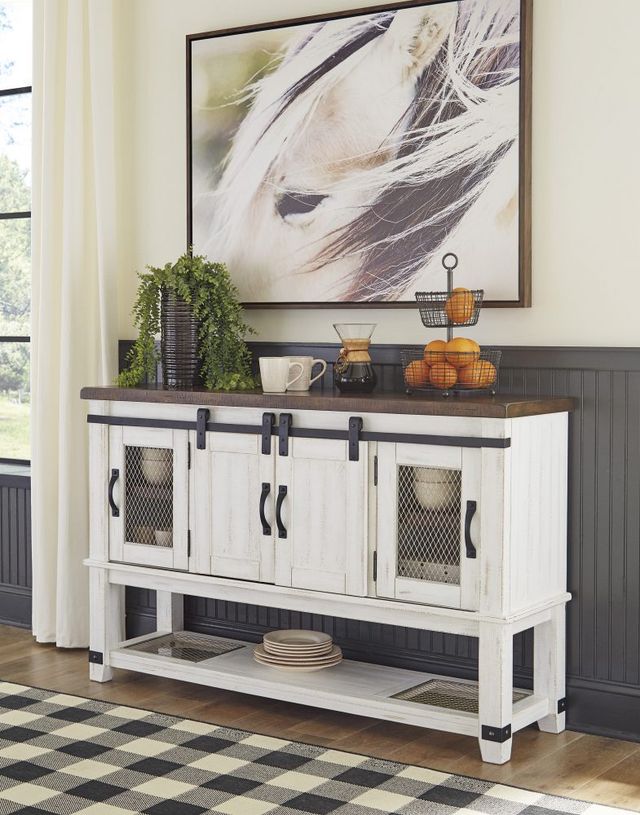
Holiday platters end up stacked on the dining table because there is nowhere else to put them. The good china is still taped inside a box in the basement years after the wedding, and the table linens live in a hall closet two rooms away, so they only surface when somebody remembers they exist. Meanwhile the chargers, the extra leaf, the candles and the serving bowls are scattered across four different rooms. A dining room without a dining room cabinet borrows storage from the whole house, and the table itself turns into the landing spot for everything the room cannot hold.
Find the Dining Room Storage Your House Has Been Missing
Our team matches servers, credenzas and display cabinets to real wall measurements and real finishes you can compare side by side in person. Shop dining room furniture with local delivery, in-home setup and financing available.
The fix is simpler than a full remodel, and it costs a lot less than one. At Zeglin’s Home TV & Appliance, we walk shoppers through this every week, starting with a tape measure and a photo of the wall. This guide covers what each cabinet type is actually called and how the terms overlap, how to size a piece to your wall and your table, seven specific storage ideas you can copy, what belongs in each drawer and shelf, how to style the top so it looks designed instead of cluttered, and six pieces worth comparing before you buy.
Key Takeaways
- Height and function matter more than the name: Retailers use sideboard, buffet, server and credenza almost interchangeably, so compare overall height, depth, door style and whether the top works as a serving surface instead of shopping by label.
- Clearance is the measurement that decides the fit: Leave at least 36 inches of walkway between the cabinet and the table, and 42 to 48 inches where chairs have to pull out behind someone walking past.
- Two thirds is the proportion rule: A cabinet roughly two thirds the length of your dining table, and about 8 to 12 inches narrower than the wall it sits on, reads balanced instead of crammed.
- Finish decides which room the piece belongs in: Dark stains read formal and traditional, mid-brown reads transitional, chipped white reads cottage and farmhouse, and two-tone brown and white gives a plain room both warmth and contrast.
Dining Room Cabinet Types Explained: Sideboard, Buffet, Credenza, Hutch and More
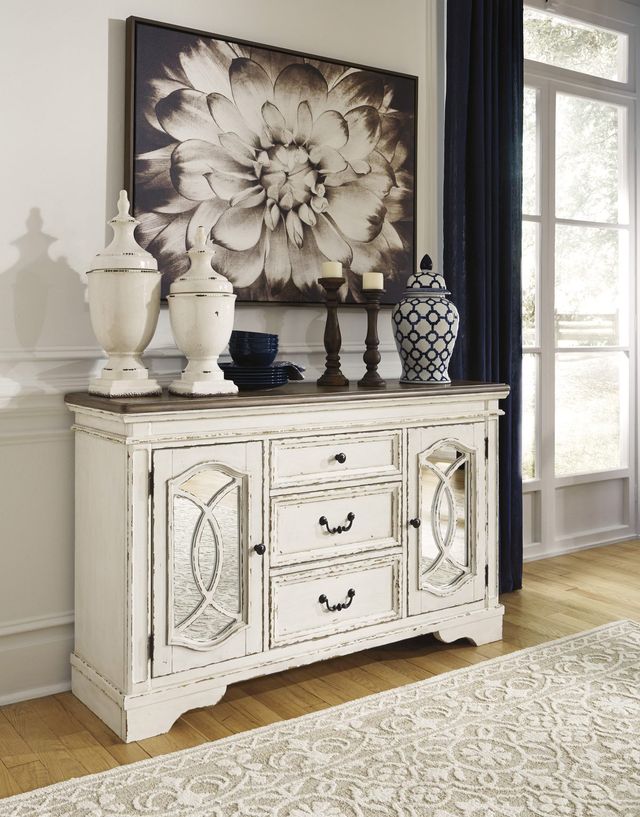
A dining room cabinet is any freestanding storage piece built to live along a dining room wall, holding serveware, linens, dishes and glassware while giving you a flat surface to serve from. The category covers sideboards, buffets, servers, credenzas, china cabinets, hutches, display cabinets, corner units and bar cabinets. They differ in height, depth, door style and how much of the front is glass.
Sideboard
Longer and lower, with most of the storage enclosed behind doors. A sideboard usually runs wider than a buffet and leans on cabinet space rather than deep drawers.
Buffet
Historically taller with shorter legs, built so the top sits at a comfortable height for serving food. If a piece is described as a buffet, expect a top you can plate from without stooping.
Server
A narrower, often shallower version built specifically for a dining room. Servers tend to combine a couple of drawers with a cabinet or open shelf, and they fit walls where a full sideboard would swallow the room.
Credenza
A low, clean-lined piece with roots in mid-century design, typically with flat-front or sliding doors and a lower overall profile. Credenzas sit lower than buffets, which is why they migrate so easily into living rooms and offices.
China Cabinet
An enclosed lower base topped by a glazed display section, sold as one piece. This is the traditional answer for storing everyday dishes below and showing china above.
Hutch
The open or glass-front upper unit that sits on top of a buffet or server base. A hutch is a topper, not a standalone piece, and it is what turns a buffet into a full-height display wall.
Curio and Display Cabinet
Display-first pieces with glass on multiple sides, glass shelving and interior lighting. Storage is secondary here, so treat them as a place to show collections rather than stash platters.
Pier Cabinet
A tall, narrow display cabinet designed to flank something else, usually a fireplace, a bridge unit, a window or a matching second pier. Because they come in pairs, they are sold as left and right versions. A left pier cabinet is built to sit on the left side of the arrangement, with its door hinged and its finished side oriented accordingly, and buyers order the wrong hand constantly. Stand facing the wall and decide which side of the centerpiece the cabinet goes on before you order.
Corner Cabinet
A triangular or angled-back unit that fills a corner most rooms waste. It buys real display and storage space without taking a single inch of usable wall.
Bar Cabinet
Built around bottles and stemware, with wine racks, stem holders and often a pull-out or drop-front serving surface. Many double as a coffee station.
Here is the honest part competitors dance around. Manufacturers and retailers use sideboard, buffet, server and credenza more or less interchangeably today, and the same piece can carry two different names on two different websites. Ignore the label and compare five physical traits instead:
- Overall height, since anything under about 32 inches is awkward to serve from.
- Depth, because a deep piece eats walkway and a shallow one may not hold a large platter.
- Door style, meaning solid doors that hide clutter versus glass doors that put contents on display.
- Leg style, since tall legs read light and airy while a base to the floor reads solid and traditional.
- Whether the top is finished and flat enough to hold chafing dishes, a coffee setup or a lamp.
The rule of thumb worth writing on your hand: shop a dining room cabinet by height and function, not by what the tag calls it.
Read more:
- What is a Modular Sectional Sofa? Benefits & Drawbacks
- 7 Best Ashley Furniture Recliners & Their Features
7 Ways to Add Storage and Style to Your Dining Room
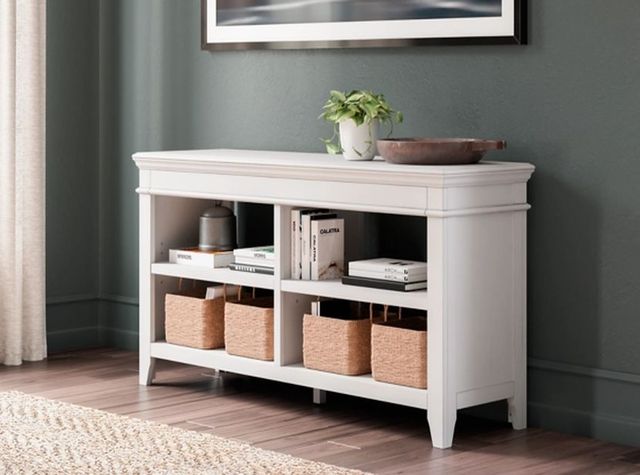
These seven ideas cover the realistic range of dining room storage, from a single low piece along a blank wall to a full-height display unit. Each one solves a different problem, suits a different room shape and asks for a different amount of floor space. Read them against your own wall before you fall in love with a finish.
1. A Long Low Sideboard as the Everyday Workhorse
This is the piece that fixes the platter problem first. A long sideboard gives you enclosed cabinet space for serving pieces, drawers for flatware and linens, and a full-length top that becomes a buffet line when you have twelve people to feed. It suits anyone who entertains a few times a year and wants storage hidden behind doors rather than on display. Place it on your longest unbroken wall, and keep the piece roughly two thirds the length of your table so the two read as a set. If the wall has a window above it, keep the top styling low and let the light through.
2. A Buffet With a Hutch for Storage Plus Open Display
Adding a hutch turns one piece of furniture into a wall of storage. The base hides everything you do not want seen, while the glass-front or open upper holds the dishes and glassware you actually like looking at. This one suits a family that inherited china and refuses to keep it boxed. Measure ceiling height first, since a buffet and hutch together often lands in the 72 to 84 inch range, and an 8-foot ceiling with a chair rail can make a tall unit feel like it is leaning over the table. A short wall between two doorways is usually the wrong spot for this idea.
3. A Low Credenza for a Clean Modern Look
A credenza gives you closed storage without visual bulk, which is exactly what an open-plan dining zone needs when the living room can see straight into it. The low profile keeps sightlines open across the room, and the flat top handles a lamp, a tray and a coffee setup without looking crowded. It suits mid-century, modern and transitional rooms, and it is the most portable choice in this whole list. Credenzas move to a hallway, an office or behind a sofa later without looking out of place. Just know the lower height means less comfortable serving.
4. A Traditional China Cabinet for Heirloom China and Crystal
Nothing else protects and shows a full china service the way a glazed cabinet does. Look for plate grooves in the display shelves, adjustable shelf positions for stemware of different heights and felt-lined flatware drawers in the base. This idea suits a formal dining room that gets used for holidays and gets dusted between them. Give it a wall with real presence, ideally one you see when you walk into the room, and check that door swing has clearance from the nearest chair. Skip it in a narrow eat-in space with heavy daily traffic.
5. A Lighted Display or Pier Cabinet for Collectibles and Glassware
When the collection is the point, a display cabinet or a pier cabinet earns its footprint. Glass on multiple sides, glass shelves, a mirrored back and touch or LED interior lighting turn crystal and collectibles into the room’s focal point after dark. Pier cabinets are the tall narrow version, sold in left and right hands so they can flank a fireplace, a window or a bridge unit between them. That makes them the answer for a bay window wall or any layout with a fixed centerpiece already in the middle. Keep the display curated, because glass shows every gap and every fingerprint.
6. A Corner Cabinet to Reclaim a Dead Corner
Small dining rooms almost always have one corner doing nothing. A corner cabinet turns that dead triangle into three or four shelves of display and a closed base for storage, without stealing wall space you need for chairs or a doorway. It suits a tight room where a full sideboard would block the walkway. Angle it into the corner squarely and check that the door opens clear of the adjacent wall. This is the single best small dining room storage idea for a room under about 11 feet across.
7. A Bar Cabinet or Beverage and Coffee Station
Turning a cabinet into a drinks and coffee station takes the morning traffic out of the kitchen entirely. Look for wine bottle racks, stemware holders, an interior shelf sized for bottles and a cord cutout if you plan to plug in a coffee maker or a kettle. This idea suits open-plan homes where guests naturally drift toward the dining zone, and it works beautifully on a short wall between two doorways where a long piece would never fit. Keep a tray on top to corral the everyday items, and leave the rest of the surface clear.
Dining Room Cabinet Comparison: Which Type Fits Your Space
| Cabinet Type | Typical Height | Typical Width and Depth | Storage Style | Best For | Watch Out For |
|---|---|---|---|---|---|
| Sideboard | 34 to 38 inches | 60 to 72 inches wide, 16 to 20 inches deep | Enclosed shelves plus drawers | Long unbroken walls and big serving needs | Needs real wall length to look right |
| Buffet | 34 to 38 inches | 48 to 66 inches wide, 18 to 20 inches deep | Drawers plus cabinets | Comfortable serving height for holidays | Deeper pieces eat into walkway clearance |
| Buffet with Hutch | 72 to 84 inches total | 48 to 66 inches wide, 18 to 20 inches deep | Open or glass display above enclosed base | Storing and showing china in one footprint | Ceiling height and chair rail can limit fit |
| Credenza | 26 to 32 inches | 54 to 72 inches wide, 16 to 20 inches deep | Enclosed shelves behind flat or sliding doors | Open-plan rooms with shared sightlines | Lower top is less comfortable for serving |
| China Cabinet | 72 to 84 inches total | 42 to 60 inches wide, 16 to 20 inches deep | Glass-front display over closed base | Formal rooms with heirloom china | Glass needs regular cleaning and curating |
| Curio Cabinet | 70 to 80 inches | 30 to 40 inches wide, 14 to 18 inches deep | Glass shelves with interior lighting | Collections and glassware on display | Very little hidden storage |
| Corner Cabinet | 70 to 84 inches | 28 to 36 inches across the front | Display shelves over a closed base | Tight rooms with a wasted corner | Door swing can clash with the side wall |
| Bar Cabinet | 34 to 42 inches | 30 to 48 inches wide, 16 to 20 inches deep | Wine and stemware storage plus a serving top | Entertaining and coffee service | Narrow width limits general storage |
Find the row that matches your room condition, note the height range, then measure your wall against it before you shop.
How to Size a Dining Room Cabinet to Your Wall and Table
Measuring takes fifteen minutes and prevents the single most expensive mistake in this category. Work through it in this order:
- Measure the wall opening end to end, from trim to trim or from corner to the nearest fixed obstacle.
- Subtract clearance for door and drawer swing on both sides, since a door that cannot open fully makes the storage useless.
- Confirm walkway clearance between the cabinet front and the table edge.
- Check ceiling height and note any chair rail, wainscot cap or crown molding if you are considering a hutch, curio or pier cabinet.
- Measure the entire delivery path, including exterior doorway width, interior door width, stairwell turns and the hallway corner the piece has to pivot around.
Now the benchmarks. Aim for a cabinet roughly two thirds the length of your dining table so the two pieces look related. Leave at least 36 inches of walkway between the cabinet and the table, and push that to 42 to 48 inches wherever someone has to squeeze past a chair that is pulled out. Keep the piece about 8 to 12 inches narrower than the wall it occupies so it has breathing room on each side, and target a top surface near 34 to 38 inches if you plan to serve from it.
Open-plan rooms change one thing. When a cabinet floats as a divider between the dining zone and the living room, the back of it is visible from a sofa, so confirm the piece has a finished back before you place it anywhere but flat against drywall. A raw or unfinished back is normal on pieces built to sit against a wall and it looks exactly like what it is from three feet away.
The obstacles nobody mentions live at floor level and just above it. Outlets get buried behind a solid back, so plan a cord route if you want a lamp or a coffee maker. Thick baseboards push a cabinet forward an inch or more, floor vents get blocked by a full base to the floor, and a low window sill can collide with a hutch or a tall backsplash. Check all four before you commit to a width.
Here is the safety detail our delivery team handles on every tall piece and the one most people skip when they move furniture themselves: hutches, curios, china cabinets and pier cabinets ship with an anti-tip restraint that is meant to be anchored into a wall stud, not just drywall, and most manufacturer warranties exclude tip-over damage on a unit that was never secured. It takes five minutes with a stud finder and it is the difference between a stable display cabinet and a real hazard in a house with kids or pets.
Measuring for delivery matters as much as measuring for the wall. A 66-inch sideboard that fits the room perfectly is still a problem if the stairwell turns at 32 inches, which is why professional delivery and setup from a local team beats a curbside drop from a freight carrier.
What to Store in a Dining Room Cabinet and How to Organize It
Organize by zone, not by object. Each part of the cabinet is built for a different job, and matching contents to zone is what keeps a piece useful three years later instead of turning it into a junk drawer with nicer hardware.
Drawers
The top drawers are prime real estate, so give them the things you reach for constantly. Flatware, serving utensils and napkin rings belong in a felt-lined drawer, where the lining stops silver from sliding and rubbing. Wide shallow drawers hold table linens and placemats flat, which prevents the fold creases you can never iron out. Reserve the most reachable drawer for candles, coasters, matches and card games.
Lower Enclosed Shelves
Behind the doors is where the bulky, seasonal and heavy items go. Platters, large serving bowls, chafing dishes, gravy boats and seasonal dinnerware all live here, ideally on adjustable shelves set to the actual height of your tallest piece. Store platters upright in a plate rack where the shelf allows, since stacking them flat means unloading four to reach the one on the bottom.
Glass-Front Display Shelves
Display shelves are for the pieces that look good doing nothing. China, crystal, stemware and collectibles read best when you group by material and vary the heights. Use stemware holders so glasses hang instead of tipping, set shelves at different spacings rather than even ones, and leave visible space between groupings. A crowded glass front looks like a cupboard, not a display.
The Top Surface
Keep the top at roughly half working surface and half styling. That way you can slide a chafing dish and two serving bowls onto it during a holiday meal without relocating a lamp and a stack of books first.
A few care details that separate a cabinet from a storage box:
- Slip felt or quilted dividers between stacked plates so glaze does not scratch glaze.
- Store wine bottles horizontally or tilted slightly down so the cork stays wet and does not shrink.
- Keep silver away from humidity and away from rubber bands or rubber shelf liner, both of which accelerate tarnish.
- Rotate seasonal pieces to the back after the holidays and pull everyday items forward.
- Set adjustable shelves before you load the cabinet, not after, because moving a loaded shelf is how stemware breaks.
In a smaller home, the piece has to work harder than one meal a year. An eat-in dining space can carry board games, homework supplies, craft materials, overflow small appliances or a printer behind closed doors without the room looking like storage. Assign one drawer and one shelf to that second job and keep the rest dedicated to dining, so the two uses never fight over the same space.
Dining Room Cabinet Pros and Cons Before You Commit
A cabinet is the biggest piece of furniture most dining rooms add after the table itself, so it deserves an honest accounting. The upside is storage, serving surface and a room that finally looks finished. The trade is floor space, budget and upkeep, and how heavily those land depends on how narrow your room is and how often you actually eat in it.
Pros
Reclaims your table and your closets
Platters, linens and serveware move out of the hall closet, the basement and the dining table itself, which gives you back a surface you can actually eat on.
Protects and shows good china and glass
Enclosed shelves and glass-front display keep dishes off open counters and away from breakage while still letting you see them.
Adds a real serving surface for holidays
A top at 34 to 38 inches turns a crowded sit-down meal into a comfortable buffet line and frees the table for plates and people.
Anchors the room visually
A long low piece along a blank wall gives the room a second focal point, so the table stops floating in the middle of an empty box.
Built-in storage without construction
You get the look and function of built-in cabinetry with no contractor, no permits and a piece you can take with you when you move.
Cons
The footprint costs you floor space
In a narrow or small dining room, 18 to 20 inches of depth plus walkway can be the difference between comfortable seating and turning sideways to get past a chair.
Large glass and hutch pieces demand upkeep
Glass doors show fingerprints and dust, tall units need the display kept curated rather than crammed, and the visual weight can overwhelm a room with an 8-foot ceiling.
Read more:
How to Style the Top of a Dining Room Cabinet
Styling a cabinet top is a formula, not a talent. Anchor the arrangement with one tall element such as a mirror, framed art or a leaning canvas. Add one mid-height element next to it, usually a lamp, a vase or a tall vessel. Then add a low grouping such as a tray, a bowl or a short stack of books. Leave the remaining third of the surface open so you have somewhere to set a platter.
The numbers keep it from looking accidental. Hang art or a mirror roughly 6 to 8 inches above the cabinet top so the two read as one composition rather than two separate things. Keep the whole arrangement to about two thirds the width of the cabinet, centered. Group objects in odd numbers, and vary the heights so your eye moves instead of scanning a flat line.
Function should drive the top as much as looks. Before a holiday meal, clear everything but the anchor piece and you have an instant buffet surface. A pair of matching lamps at each end changes the room’s lighting completely, giving you a soft second light source for dinner that a single overhead fixture never provides.
Behind glass, the rules shift slightly. Stand plates upright in the shelf grooves and let the pattern face out, cluster crystal and stemware by height so the shelf has a visible rhythm, and keep collectibles in groups of three rather than spread evenly. Interior lighting and a mirrored back double the apparent depth of the cabinet and make the whole display read intentional instead of stored.
Things to avoid on the top surface:
- Crowding the surface until there is nowhere to set a serving dish.
- Lining up objects that are all the same height.
- Blocking an outlet, a light switch or a thermostat with a tall piece.
- Centering a small piece of art on a wide cabinet, which makes both look undersized.
- Leaving cords visible across the front of the top.
Choosing Materials, Finishes and Styles That Match Your Dining Set
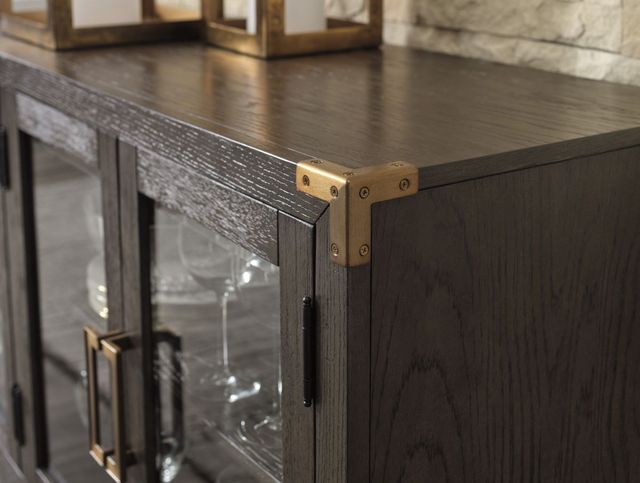
Construction sets the price and the lifespan. Solid hardwood resists dents, holds hardware tight and can be sanded and refinished decades later, but it weighs more and costs more. Hardwood veneer over an engineered core delivers the same grain and finish for far less money and stays dimensionally stable, though it cannot be refinished and it suffers if water sits on it. Metal and glass accents add lightness and contrast, and glass shelving in particular makes a tall unit feel less heavy in a small room.
Finish and hardware are the fastest style levers you have. Painted pieces read casual, cottage or coastal, while stained wood reads warmer and more traditional. A matte finish hides fingerprints and minor wear better than a high sheen. Swapping the hardware for brass, matte black or brushed nickel updates the whole face of a cabinet in an afternoon and costs less than a lamp.
Matching Cabinet Types to Style Directions
- Traditional: china cabinets, buffets with hutches and dark stained servers with turned legs and detailed molding.
- Transitional: mid-brown servers and sideboards with clean lines and simple hardware, which sit comfortably with almost anything.
- Farmhouse and cottage: chipped white, whitewash and distressed painted finishes with plank details and simple pulls.
- Mid-century modern: low credenzas with tapered legs, flat-front doors and warm wood tones.
- Coastal: pale gray, soft white and light natural wood with glass fronts and open display.
- Industrial: two-tone pieces mixing dark wood with metal hardware, banding or a contrasting painted top.
Now the question we get most. Your dining room cabinet does not have to match the table and chairs, and a set that matches perfectly often looks like it was bought in one click. Coordinate instead. Stay inside one finish family, keep leg style and hardware finish consistent across the room, and let one piece contrast on purpose. A whitewash server with a warm wood table looks collected, while a whitewash server, a whitewash table and whitewash chairs looks flat.
One caution on finish, and it is the reason showrooms exist. Whitewash, chipped white, weathered gray and two-tone finishes all shift noticeably between warm bulbs and daylight, and a screen almost never tells the truth about undertone. Bring a fabric sample or a flooring offcut into the showroom and compare it against the actual piece under real light, because online-only shoppers misjudge wood tone constantly and finish returns on large furniture are painful.
The Reset Test: Match the Cabinet to How Your Dining Room Actually Gets Used
Before you choose between a display piece and a closed-door piece, time yourself on one honest question: how many minutes would it take to make your dining room guest-ready right now. That number predicts which cabinet you will still be happy with in two years better than any style quiz. A room that resets in under five minutes is a room where the storage is doing its job and the surfaces stay mostly clear, which means glass fronts and open display will stay looking good. A room that needs twenty minutes of relocating mail, homework and laundry baskets needs doors, drawers and hidden capacity far more than it needs a lighted display shelf. The mismatch is what turns a beautiful china cabinet into an expensive place to stack junk mail where everyone can see it.
Run your room through these five checks and the choice usually makes itself:
- Count how many times a year the room hosts a real meal. Under six, prioritize closed storage; over twelve, prioritize serving surface and reachability.
- Note whether the dining table doubles as a desk, a homework station or a mail drop. If it does, buy doors before you buy glass.
- Look at what sits on the table right now. Whatever it is tells you exactly which zone your cabinet needs most.
- Check the sightline from your main seating area. If the living room can see the cabinet, the back, the top and the display all have to look finished.
- Ask who cleans. Glass fronts, mirrored backs and open shelving each add a recurring chore, and a household that resents dusting should buy solid doors.
Read more:
- Best Appliance Stores in Davenport, Iowa: Why Locals Choose Zeglin’s
- How to Choose Among Appliance Stores in Davenport, Iowa
Dining Room Cabinets and Storage Pieces Available at Zeglin’s
The six pieces below cover genuinely different rooms rather than six versions of the same idea. Four are dining servers in four distinct finishes, each aimed at a different style direction, one is a tall pier cabinet built for display alongside a fixed centerpiece, and one is a credenza flexible enough to leave the dining room entirely. All are available with local delivery, professional in-home setup and financing.
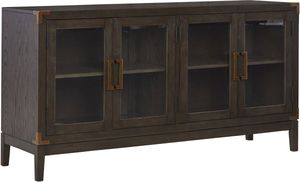
Signature Design by Ashley Burkhaus Dark Brown Dining Server
Shop Dining Room Sideboards & Buffets
A formal dining room with a dark stained table needs storage that reads as part of the room rather than an afterthought. The deep dark brown finish here does exactly that, anchoring a traditional space the way a lighter piece never will, and giving you enclosed storage plus a serving surface along your longest wall. Dark finishes also hide everyday wear better than pale ones. Apply the two thirds rule from the sizing section against your table length, then confirm the exact width and depth on the product page before you order.
Top Features
- Dark brown traditional finish: Reads formal and pairs naturally with a stained dining table and darker flooring.
- Server proportions: Built for dining room duty, with a top height suited to plating and buffet service.
- Enclosed storage plus surface: Keeps platters and linens out of sight while giving you room to serve.
- Wear-forgiving color: Deep finishes disguise scuffs and dust better than white or whitewash pieces.
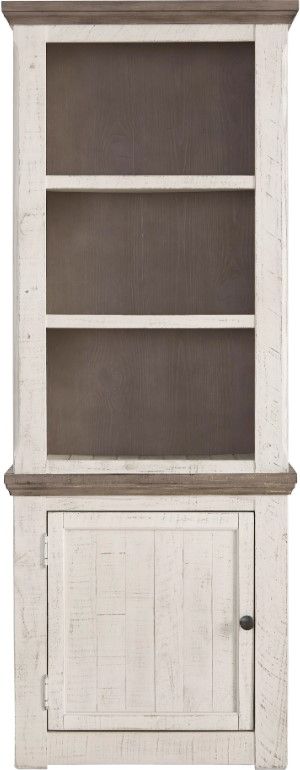
Signature Design by Ashley Havalance Two Tone Left Pier Cabinet
Shop Dining Room Display Cabinets
Rooms with a fireplace, a television wall or a fixed window centerpiece have vertical space sitting empty on either side. A pier cabinet fills it. This is the left-hand version, meaning it is built to stand on the left side of a paired arrangement, so check which side you need before ordering because the hand cannot be changed later. The tall narrow footprint gives you display height without stealing walkway, and the two tone finish keeps a large piece from reading heavy. Anchor it to a stud as covered earlier.
Top Features
- Left-hand pier orientation: Designed for the left side of a flanking pair, so order the hand that matches your wall.
- Tall narrow footprint: Adds display and storage height in rooms with little floor space to spare.
- Two tone finish: Mixes tones so a full-height piece feels lighter and less imposing.
- Flanking design: Works alongside a fireplace, a window, a media wall or a matching right pier.
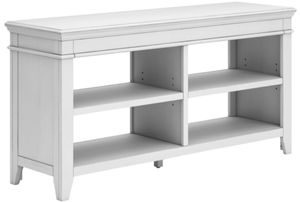
Signature Design by Ashley Kanwyn Whitewash Credenza
Shop Dining Room Sideboards & Buffets
A credenza sits lower than a server, which is the whole point. That lower profile keeps sightlines open in an open-plan room and makes this piece the natural choice for a coffee or beverage station where you want easy reach rather than serving height. The whitewash finish brightens a room with limited natural light and leans farmhouse and coastal at once. It is also the most portable piece here, since a credenza works as a media console, a hallway piece or office storage if your dining room needs change later.
Top Features
- Low credenza profile: Keeps open-plan sightlines clear and suits a coffee or beverage station.
- Whitewash finish: Lightens darker rooms and coordinates with painted trim and light flooring.
- Multi-room flexibility: Moves easily into a living room, hallway or office as a media console or storage piece.
- Clean-lined styling: Simple enough to sit alongside farmhouse, coastal and transitional furniture.
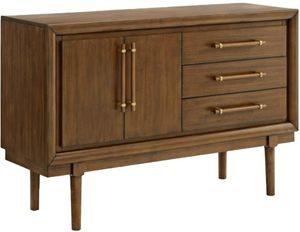
Signature Design by Ashley Lyncott Brown Dining Server
Shop Dining Room Sideboards & Buffets
Most dining rooms are not strictly formal or strictly farmhouse, and that middle ground is where a mid-brown server earns its keep. The warm brown finish coordinates with the widest range of existing tables, floors and chairs, which makes this the safest pick when you are adding storage to a room you do not plan to redecorate. Use it as the everyday workhorse described earlier, with drawers for flatware and linens and closed storage below. Confirm the width against your wall opening and the depth against your walkway clearance.
Top Features
- Transitional brown finish: Coordinates with the widest range of dining tables, chairs and flooring tones.
- Everyday server format: Combines drawer storage with enclosed space for platters and seasonal dinnerware.
- Neutral styling: Sits comfortably in rooms that are neither strictly traditional nor strictly modern.
- Serving-height top: Gives you a real buffet surface when the table is full of people and plates.
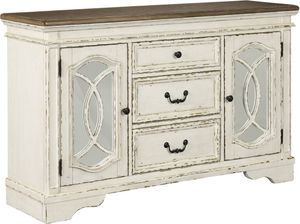
Signature Design by Ashley Realyn Chipped White Dining Server
Shop Dining Room Sideboards & Buffets
Cottage and farmhouse dining rooms live or die on finish, and a chipped white server delivers that lived-in painted look without hunting through antique shops for months. The pale finish reflects light, which makes it the strongest choice for a dining room with one small window or a north-facing wall. It also pairs beautifully with a warm wood table, giving you the coordinated-not-matching effect covered earlier. Compare it in person against your flooring, since white and whitewash finishes shift more than any other tone under artificial light.
Top Features
- Chipped white cottage finish: Delivers an aged painted look that suits farmhouse and cottage dining rooms.
- Light-reflecting color: Brightens rooms with limited natural light better than any stained finish.
- Contrast pairing: Looks intentional beside a warm wood dining table instead of matching it exactly.
- Dining server format: Drawer and cabinet storage with a top sized for holiday buffet service.
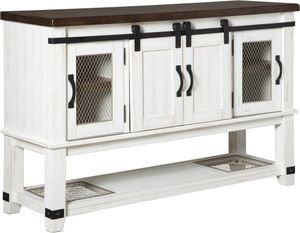
Signature Design by Ashley Valebeck Brown White Server
Shop Dining Room Sideboards & Buffets
Some dining rooms need warmth and contrast at the same time, usually the ones with white trim, white walls and a wood floor that all blur together. A two-tone brown and white server solves that in one piece, breaking up a flat wall with two distinct tones instead of asking a single finish to do all the work. It reads farmhouse with an industrial edge depending on the hardware around it. Place it on your longest wall, and use the styling formula from earlier so the top plays off both tones.
Top Features
- Brown and white two-tone finish: Adds warmth and contrast at once in rooms where everything reads the same tone.
- Visual weight breaker: Two tones keep a long piece from looking like one heavy block along the wall.
- Style flexibility: Works with farmhouse, transitional and lightly industrial dining rooms.
- Server storage layout: Drawers and enclosed space with a top that doubles as a serving station.
Find Your Dining Room Cabinet at Zeglin’s and Start Entertaining in Style
Pick the type by height and function rather than by what the tag calls it, size it against your wall, your table and your walkway before you fall for a finish, then organize it by zone and style the top so it stays useful instead of turning into a shelf for mail. Get those three things right and the piece earns its floor space every single week, not just at Thanksgiving.
Shop dining room furniture at Zeglin’s Home TV & Appliance online, or bring your wall measurements and a flooring sample in and compare finishes side by side under real light. Our team can tell you which pieces need a hutch topper and which stand alone, help you sort left-hand from right-hand pier units before you order rather than after, and set up local delivery with in-home placement instead of leaving a heavy carton in the driveway. Financing is available, and when you need a shelf pin or a service call two years from now, you are calling the same local store that sold you the piece. That is the difference between an independent retailer and a checkout page, and it is worth remembering when you choose a dining room cabinet you plan to keep for decades.
Frequently Asked Questions about Dining Room Cabinets
A sideboard is longer and lower with mostly enclosed storage, a buffet sits taller on shorter legs with a top built for serving, and a credenza has a low mid-century profile with flat or sliding doors. In practice retailers use all three terms interchangeably, so compare overall height, depth and door style instead of trusting the label.
A dining room cabinet meant for serving should stand roughly 34 to 38 inches tall, matching standard counter height so plating is comfortable. Credenzas run lower at about 26 to 32 inches, while china cabinets, curios and pier units reach 70 to 84 inches overall and need ceiling height checked first.
Aim for a cabinet roughly two thirds the length of your dining table and about 8 to 12 inches narrower than the wall it sits on. Then confirm at least 36 inches of walkway between the cabinet and the table, or 42 to 48 inches where chairs have to pull out.
Store flatware, serving utensils and table linens in the drawers, platters, serving bowls and seasonal dinnerware behind the lower doors, and china, crystal and collectibles on any display shelves. Assign contents by zone rather than filling the nearest empty space, so the pieces you reach for most stay easiest to grab.
Yes, china cabinets remain a strong choice for formal dining rooms and for anyone who owns china worth displaying, though lower servers and credenzas outsell them in open-plan homes. The deciding factor is ceiling height and how often the room actually gets used, since a tall glass-front piece needs curating and dusting to look right.
A corner cabinet or a narrow server is the best fit for a small dining room, since both add storage without stealing the wall and walkway space that chairs need. Keep depth to 16 to 18 inches where possible and hold that 36-inch minimum walkway between the cabinet and the table.
Why Trust Zeglin’s?
Since 1974, Zeglin’s has been proud to serve the Quad Cities as a trusted, family-owned appliance store. What started as a local business in Davenport has grown into a well-known destination for appliances, mattresses, and home entertainment, built on the values of quality, service, and community.
Shop Dining Room Cabinets at Zeglin’s
Our showroom features a wide selection of mattreses from the industry’s most respected brands, along with expertly designed displays to help inspire your home. At Zeglin’s, we believe every customer deserves personalized attention, dependable products, and the confidence of working with a team that cares. That’s why Davenport locals continue to choose Zeglin’s for their homes year after year.